26. Anderson’s Market and the All-New England Flood of 1936
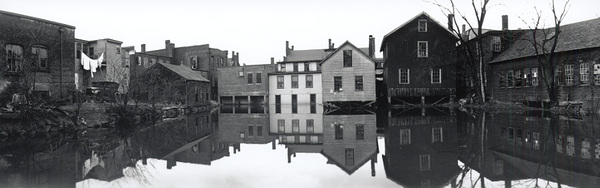
The All-New England Flood began on March 11, 1936 with a series of rainstorms. Heavy rain combined with snowmelt and dislodged ice to form a torrent that broke damns, destroyed brides, undermined mills, and severed communications throughout the region.
These rainstorms produced the worst flooding Concord had ever seen. Rivers reached their highest recorded levels, though only one bridge sustained damage. High water marks exceeded a previously memorable flood in 1886. Many roads were closed, including the Cambridge Turnpike, and people took to the streets in boats. Fred Tower recorded the following observation in his weather record for March 1936: “Concord & Sudbury Rivers unprecedentedly high from 12” to 22”. Many roads and bridges impassable. Local damage slight in comparison with many places in the Connecticut and Merrimack Valleys.”
Concord's Mill Dam, including Anderson Market, suffered significant damage on both its north and south sides. According to reports in the Concord Journal, the culvert beneath Main Street was too narrow to accommodate the volume of water. On the south side of the building, water from the Mill Brook rushed behind the stores and flooded the cellars. The north side also flooded when the Mill Brook backed up into a pool at Lowell Road. Firefighters pumped out the buildings for days.
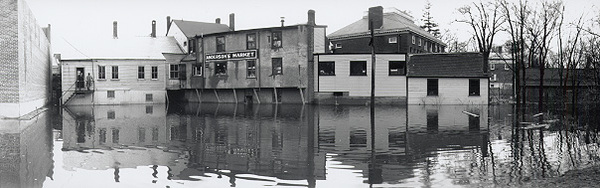
These panoramic views by Concord Road Commissioner Theodore Lincoln Smith were taken a few weeks later on March 21, as the Concord River continued to rise and flooding recurred. The 1936 Concord Town Report stated that buildings on the south side of the Milldam flooded because the drainage system was overwhelmed, but those on the north side experienced “trouble for which there is no local remedy.”
Firefighters helped business owners on the Milldam salvage merchandise and restore normal conditions. At Anderson’s, several men worked all night to rescue stock stored in the basement. In spite of all this, the March 26 issue of the Concord Journal characterized flood damage in Concord as “minimal.”