24. The Architecture of the Anderson Market Building
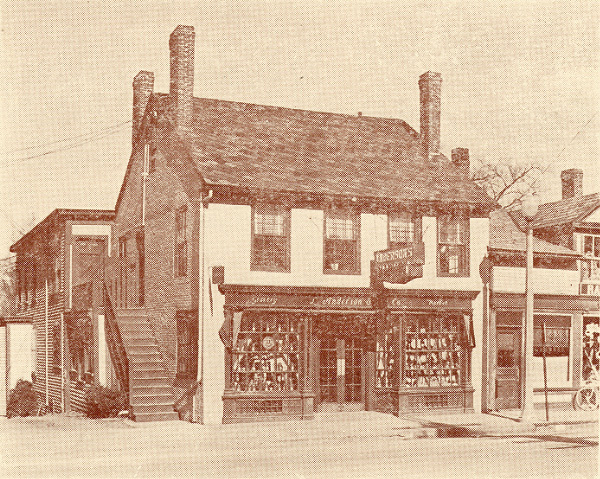
The Anderson Market building, shown here about 1937, is a significant example of late Federal-period architecture in Concord. Part of the first phase of Concord Mill Dam Company construction, it retains much of its original appearance. The building is constructed of brick, with two stories, a gabled roof, and a pair of tall, prominent end chimneys at each side. The façade has four bays at the second story and six-over-six sash windows set into flat wooden surrounds. The later additions at the rear of the building are faced with stucco and clapboard. The building has remained relatively unchanged over its nearly two-hundred-year history.
In keeping with late-1920s-to-early-1930s efforts to improve the appearance of the Milldam, Leslie Anderson commissioned architect Harry Little to make changes to the Anderson Market building's façade. Little added two large multi-light bay windows on each side of the front door. Like Little's work on the adjacent Middlesex Savings Bank, the remodel is a blend of colonial influence and Greek Revival.
Little was inspired by the bay windows that had graced many of the buildings on the Milldam when he first moved to Concord. By the 1920s, many had been replaced by plate glass. The Anderson Market building is one of many example of Harry Little's historically sensitive designs and embellishes one of the oldest buildings on the Milldam.